Collaborated with multidisciplinary teams to develop an insurance & bank advisory tool, enhancing user interaction and operational efficiency.
Role
Senior Product Designer
Team
Product Manager, Senior Product Manager, Front-end Developers, Back-end Developers
Timeline
November 2024 – November 2025
Tools
Figma, FigJam, UserTesting, PostHog, Lokalise
IN SHORT
✸
Pushed through a simplification of the product’s UX, UI and back-end
⚙︎
Implemented a strong way of working regarding tracking
✽
Saw an increased usage with users of ~30%
EXISTING PROBLEMS
– No tracking implementation whatsoever meant every new design was guesswork
– Insurely has a strong brand and design system, but it’s more catered toward outward facing applications, making it not as useful for administrative tools
– Lack of focus for the product meant it was getting more complex for the sake of it
HYPOTHESIS
– By implementing any type of tracking, we can take more informed decisions on what to keep, change or remove
– Aligning the product with the company’s other B2B offerings more tightly would give it a stronger sense of identity
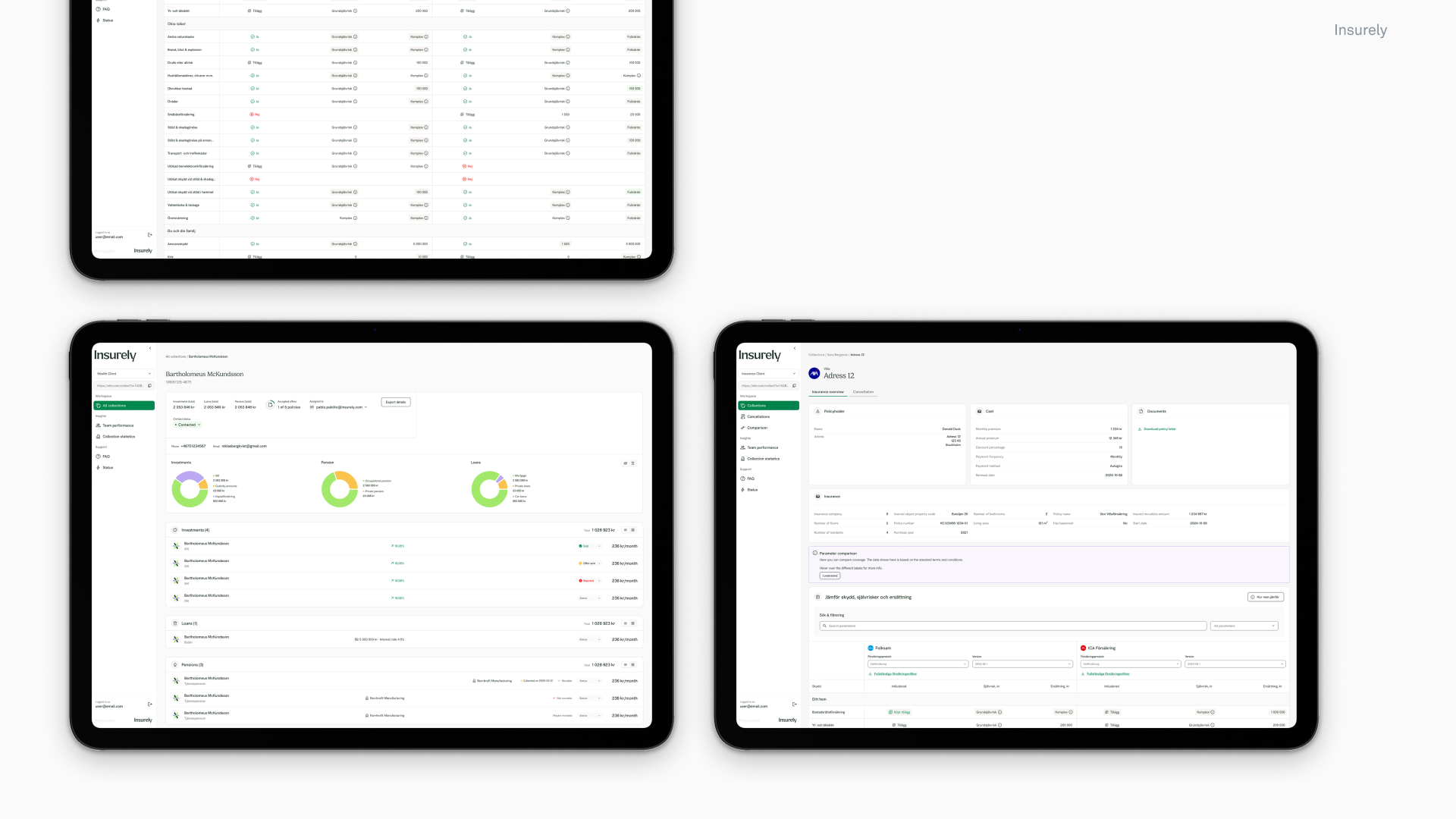
– Making a stronger distinction of components for the dashboard would give us more leeway in how we present information in a more compact way
Getting acclimated to an already established team
Coming into a team that is already strongly acclimated is never easy, but by sharing fast and often we found a way to collaborate in strong ways early on.
Thanks to this, being able to push initiatives such as tracking implementation was a simple feat.
Changing market landscape
As we were working on the platform, the market direction changes and the way our clients use the platform changed with it.
By staying on top of these changes thanks to our tracking, as well as having direct chats with the clients, we found ways to simplify and break down the product to its simplest form.
Simplifying the complex
The product was in a fairly complex position, with several workflows that looked the same, but functioned differently in the back-end. This lead to features that existed on one workflow but not on the other.
We understood quickly that users were trying to use all workflows for the same purposes, which lead to me pushing through a simplification of all the processes. This ended up with a greatly simplified UX, an easier to read UI and a back-end that could be scaled back and thusly meant greater performance.
The results
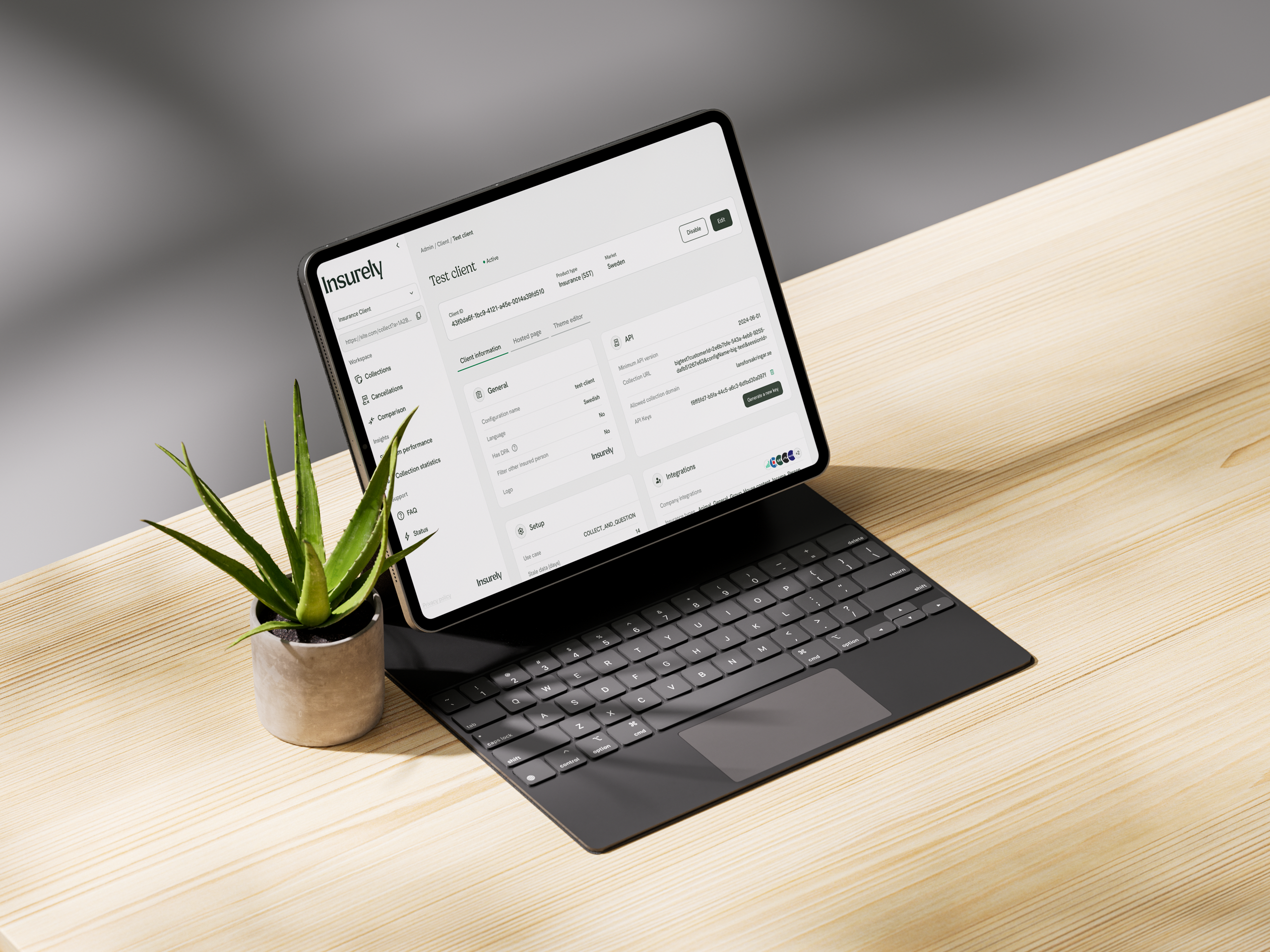
The product saw a strong continued usage from current customers and users who returned increased by approximately 30%. The simplification of the platform was greatly received and we saw no changes whatsoever in user behavior, validating our initial hypothesis.